
Welcome to Self-Exposure
If you haven’t already, go and read “How To Do Self Exposure”
As always, please consider using Applied Tension preventatively to reduce feelings of faintness before they even happen.
Below you’ll find a deceptively simple starter exposure exercise.
You will be instructed to think of potentially distressing content. Remember, anxiety is not the enemy and you don’t have to avoid it. Celebrate your willingness!

One Word At A Time
Picture the word in your mind. You can have it as far away as you want, but try not to avoid the word entirely.
Try changing it to different fonts, large and small, and in different colours.
Play around with putting the word on a birthday cake in icing, writing one letter at a time.
Try a giant neon sign.
This all might feel silly - that's part of the point!
If you can’t imagine the word (aphantasia), go to the exercise below.
Get Pen and Paper
You can start with writing the first letter of the word. Once you get a sense of willingness to try out the next letter, write each letter of the word.
Try to write the word repeatedly in as many different ways and styles as you can.
Try writing it backwards, vertically, and upside down.
Again, silliness is part of the process. If the word starts losing meaning, great.

How it Works
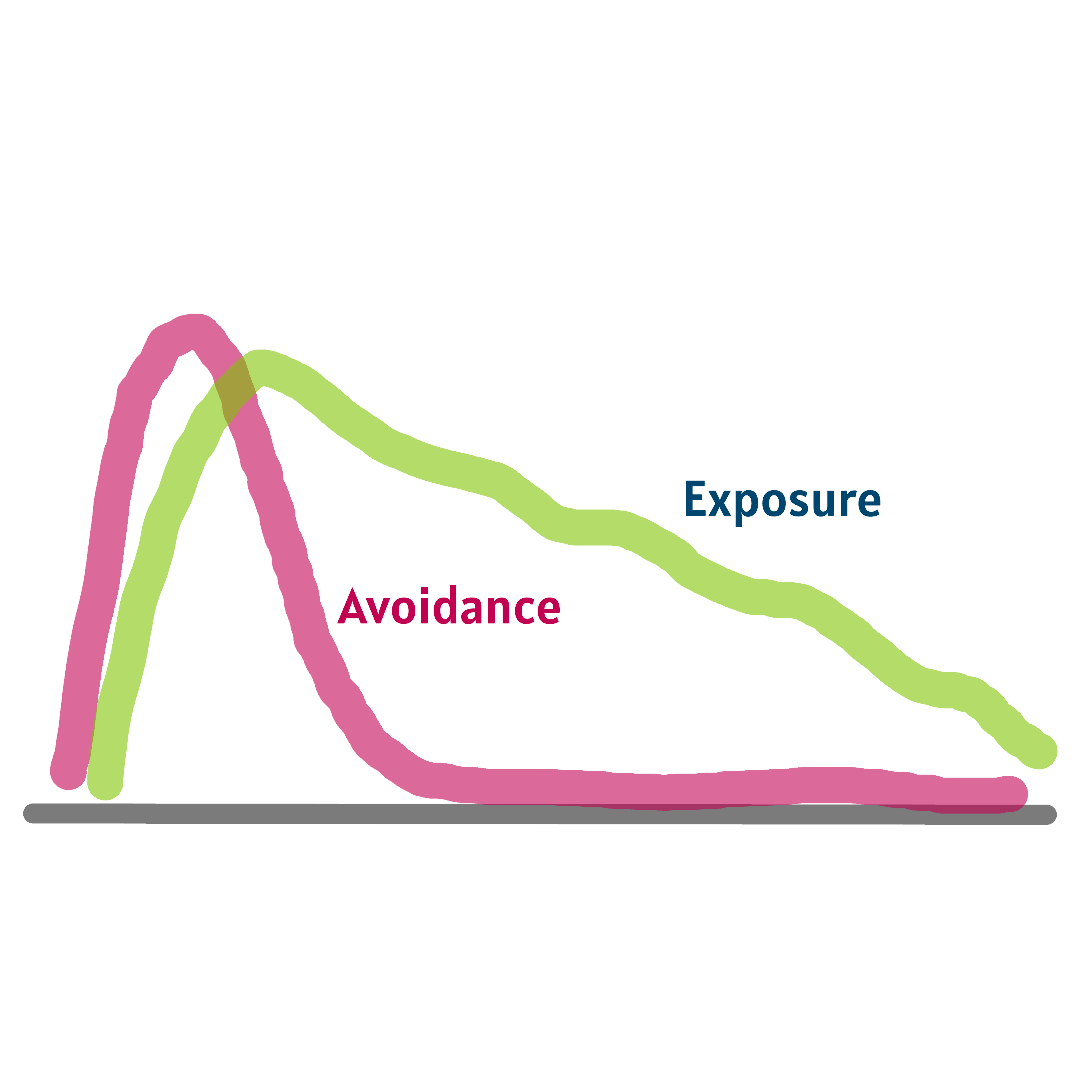
Usually, when we are exposed to a fearful medical trigger (such as a thought, word, image, memory, etc.), we avoid and escape it as quickly as we can. We leave the room, shut our eyes, turn away, or distract ourselves.
What this does over time is teach the brain that the ONLY way to reduce anxiety is to avoid the trigger.
What you did today was the total opposite. You taught your brain that you can withstand being with the trigger, even if it makes you feel (and stay) anxious.
Ready for More Exposure?
Exposure is meant to be methodical. And YOU are the one who decides what comes next.
If you felt this exercise was too easy, you might want to move on to Mini Exposures 2.
If you felt this exercise was adequately challenging for you, try repeating it with 5-10 different words. Keep a log of your words so you can celebrate your progress!
Cognitive De-Fusion
1. Start with one mildly distressing word that triggers your phobic feelings or anxiety. This is your target.
Got it?
2. Next, check in with yourself and assign that word a SUD (Subjective Unit of Distress) out of 10. I.e., how distressing is that word right now?
Got that? Great.
3. What does Fear predict will happen if you pay attention to that word for the next two minutes? Does your fear say "I can’t handle that” or, “The anxiety will just get worse”?
Got your Feared Prediction? Great work.
4. Next, check in with yourself and find your level of willingness out of 10. How willing do you feel to see what happens if you do this exercise?
Got it? Awesome, let’s move on. And yes, the birthday cake will make sense in a minute.
For your fillable PDF record-keeper of this exercise, hit the button below.
Check-In
How are your SUDs? Don’t stress if they haven’t come down much. Even if you don’t feel calm, you are breaking a powerful habit.
If your SUDs are low (3 or less), you might get bored with this exercise - AWESOME. You might want to take a break and then start the process with a brand new word. Next time, you can try pick a slightly harder one.
If your SUDs are high (4 or more), you’re doing great riding the waves of anxiety! That is a huge victory! You can take a break, or see what happens if you spend more time with this word with another exercise below.
Remember to use Applied Tension. It can help wooziness feel more in your control.

Time to Celebrate
Check in:
What were your SUDs before versus now?
SUDs at beginning:___ SUDs now: ___
Recall what your Feared Prediction was.
What actually happened? ___________________
What was your Willingness Score before? What is it now?
Willingness at beginning: ___ Willingness now:___

Take a Break
You can explore a Calm Place guided grounding exercise here.
You might want to wiggle or shake off tension, jump up and down, do a light jog on the spot, or take some full, easy breaths.
Notice how anxiety may be unpleasant, but it’s not actually dangerous right now.
You’ve done a great job not only exposing yourself to the trigger, but also to anxiety itself.
We can survive the trigger. We can survive the feelings of anxiety.